

About | Copyright © 2026 Budapest University of Technology and Economics

BUDAPEST UNIVERSITY OF TECHNOLOGY AND ECONOMICS
Faculty of Electrical Engineering and Informatics
High Voltage Laboratory – Department of Electric Power Engineering


Specialization · Sustainable Electric Power Engineering
Insulation Diagnostics and Lifetime Management
Email: cselko.richard@vik.bme.hu
The modern, technologically advanced society of the 21st century depends critically on the reliable operation of the electricity supply. A continuous supply of electric power is a basic operating condition at nearly every level of the economy. Any outage in supply means lost customers, and therefore lost revenue, for the utility. An outage also worsens its reliability indicators, which, once a critical threshold is crossed, can mean serious financial penalties for the utility. Such an outage can also paralyze the affected players in the industrial sector, causing lost production and, with it, significant financial damage. During the outage, any private individual who relies on electronic devices for their work may likewise be unable to work, which, through the resulting halt in tasks, can also harm their employer's financial position. Transformers, which connect power plants, the transmission and distribution network, and consumers, play a key role in the reliability of the power system. Failures in the high-voltage units of transformers are, in many cases, preceded by partial discharges (PD). These discharges gradually degrade the given insulating material, reducing the insulating capability of the whole insulation system, which ultimately leads to breakdown or flashover. Many serious failures can be prevented by detecting the preceding partial discharges in time and, once their location is known, repairing the fault causing them. Generally applied, standardized methods exist for detection, but only experimental, still-under-investigation methods appear in the literature for precisely determining the location. Partial discharges generate conducted electrical, acoustically-propagating mechanical, and radiated electromagnetic disturbances alike; based on measuring these, various experimental methods exist for locating the discharge. The High Voltage Technology and Equipment Group of the BME Department of Electric Power Engineering is currently carrying out active research to develop such a location system, based on antenna measurement of the electromagnetic disturbances radiated by the discharge. Diagnostic testing and monitoring of high-voltage equipment has already proven its usefulness in increasing the reliability of energy supply and in optimizing maintenance and replacement. A number of factors motivate extending these methods to low-voltage systems as well, such as control and measurement cables in industrial systems, power plants, railway signaling equipment, and aircraft. In addition, inverter-fed equipment and renewable energy sources are causing significant changes in cable operating conditions. Existing diagnostic and aging models cannot handle these pulsed and intermittent loads, so substantial work is needed to develop new models. The length of the line network operated by grid licensees in Hungary adds up to several times the circumference of the Earth. Information technology solutions, IoT-based diagnostic tools and big-data-based analytics technologies play an ever-growing role in maintaining the reliability of the network. The challenge: the aging of the network and new, increasingly complex requirements have to be managed at the same time. CONTRIBUTORS Associate Professor Assistant Professor
Transformer diagnostics

Partial discharge measurement
Cable diagnostics

Smart asset management
 → Condition Assessment of Low Voltage Photovoltaic DC Cables → Repetition Rate of Partial Discharges in Low Voltage Cables → Examination of the Emitted Electromagnetic Signals of Corona Discharges → Speciality and Applicability of Advances Response Methods in Contrast to the Traditional Dielectric Measurements → Design considerations for the use of ester-based dielectric liquids in transmission equipment → Application of Life Data Analysis in the aging power System
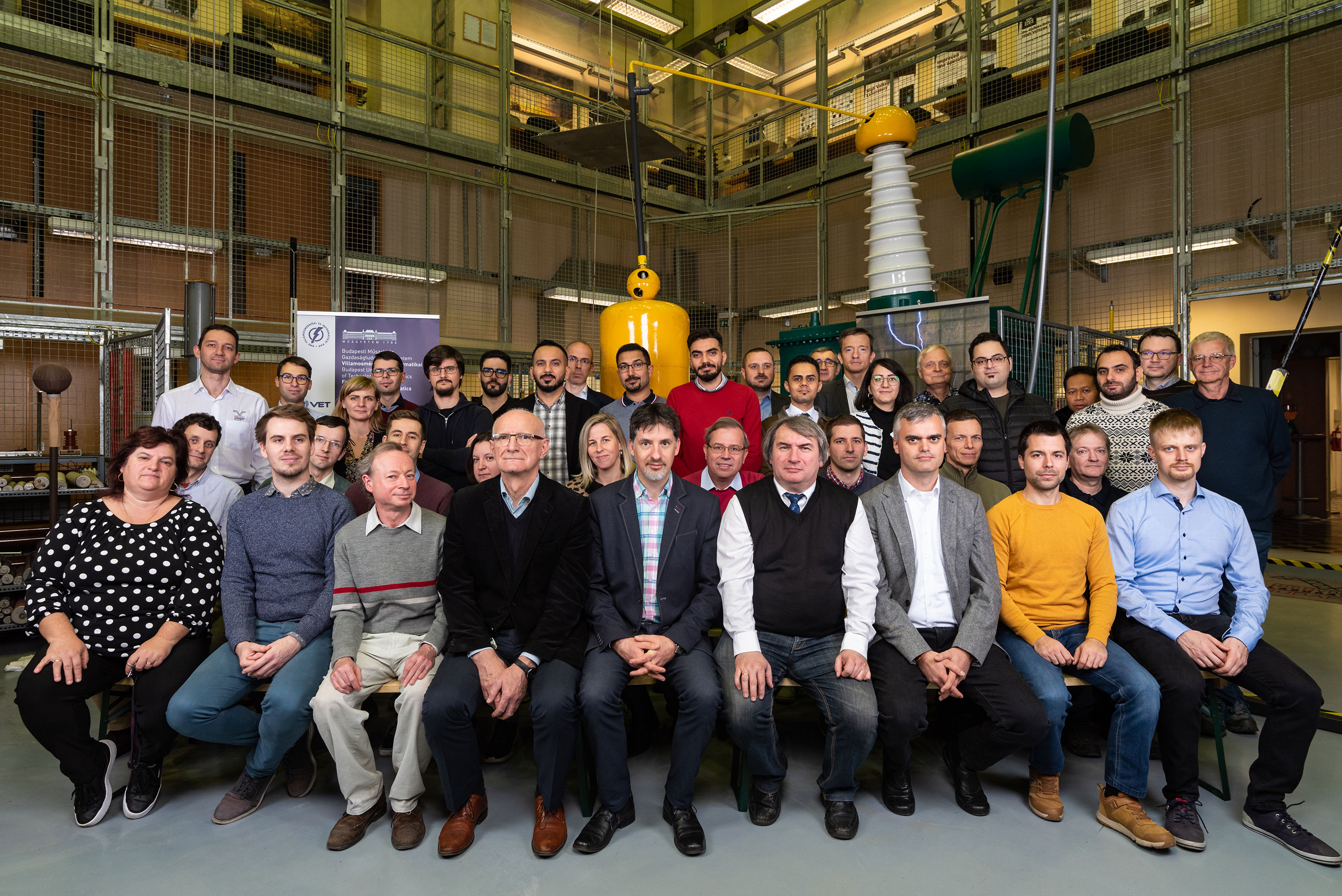
Contributing faculty and researchers

Dr. Tamus Ádám Zoltán

Dr. Cselkó Richárd